
Cork Flooring Pros and Cons for a Family Home
By The Poco Koko team · Updated Nov 18, 2026 · 5 min read

Shown in our 6.5 × 10 ft size, on the way.
On this page
Cork flooring feels warmer, quieter and a little softer underfoot than most hard floors, and it comes from tree bark that naturally grows back. On the downside, it can dent under heavy furniture, scratch from grit and pet claws, and fade in strong sun, and it depends on a good protective finish to handle spills.
Families often ask a second question too: if cork already has some give, do you still need a play mat on top of it? The short answer is that cork is softer than wood or tile, but it is still a floor. This guide covers the pros and cons first, then explains where a soft mat still makes a difference.
What cork flooring is
Cork comes from the bark of the cork oak, which is stripped from the tree by hand and grows back over time, so the tree itself keeps standing. The harvested bark is ground up, pressed and bonded into tiles or planks.
Cork floors come in two main kinds. Glue-down tiles are fixed straight to the floor below, while click planks usually have a layer of cork on top of a pressed wood core and float over a thin pad the way laminate does. Both kinds have a protective finish on top, and many come in warm, natural browns that sit well beside a soft rug. If you want a play spot that blends in the same way, our guide on picking a play mat that passes for a rug shows what to look for.
This post is about cork as a floor. If you are weighing a cork play mat against a foam one, our comparison of foam and cork play mats covers that question.
The pros of cork flooring
- Warm underfoot: cork is full of tiny pockets of air, so it does not feel cold the way tile or stone can on a winter morning.
- Quiet: it soaks up footsteps and the clatter of dropped toys better than most hard floors, which helps in a busy house or an upstairs room.
- A little give: it feels slightly springy when you stand on it, and many people find it comfortable for long stretches in the kitchen.
- Renewable: the bark grows back on the tree, which appeals to families who care where their floor comes from.
- Easy daily care: a sweep or a vacuum on the hard floor setting and a lightly damp mop keep it clean.
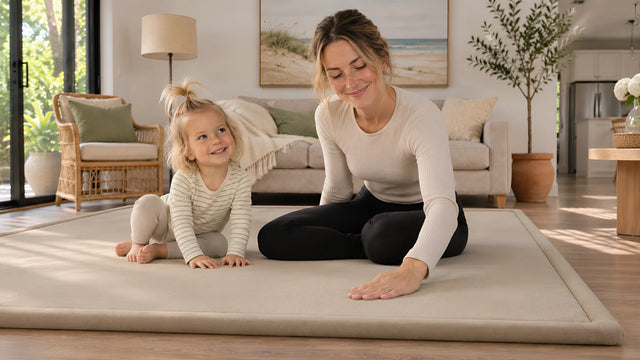
Play mats that look like a rug
The cons of cork flooring
- Dents: heavy furniture, chair legs and narrow feet can press marks into it. Many dents ease back a bit, but deep ones may stay.
- Scratches: grit, sand and pet claws can scratch the finish, so a doormat and regular sweeping matter.
- Fading: strong, direct sun can change the color over time, so a rug or mat on a sunny cork floor can leave the floor under it a slightly different shade.
- Water: the finish handles small spills you wipe up fast, but standing water can get into the seams, and click planks with a wood core can swell.
- Upkeep: the top finish wears down in busy spots and may need to be redone now and then. Check what your floor maker suggests.
- Cost: prices vary a lot by quality and kind, and they overlap with other floors, so get a local quote for your room.
Sun is worth planning for with whatever sits on the floor, too. Our care page notes that strong, direct sun can fade any fabric over time, so a play mat on cork does well in a spot out of the brightest window light.

Is cork soft enough for babies and toddlers?
Cork is softer and warmer than wood, tile or laminate, and many parents notice that right away. Still, it is a firm floor, and a baby doing tummy time or a toddler who sits and builds for a long stretch will feel it much more than they would on a cushy surface.
That is why many families with cork still add one soft spot where the kids play most. Our guide comparing thick and thin mats for floor play explains how the depth of the soft layer changes how a mat feels.
Do you still need a play mat on a cork floor?
You do not need one in every room, since cork is a perfectly good floor for walking, running and pushing toy cars. The play mat earns its place in the one area where kids sit, crawl, read and tumble for most of the day.
In that area, a one-piece mat adds two things that a cork floor cannot offer on its own.
- More cushion: it is thick and plush, and it gives a little when kids land.
- A rug look: it is finished like a real rug, so the play spot looks like part of the room, not a stack of tiles.
Ours has a velvety-soft top, a thick foam core and a non-slip backing. Made with CertiPUR-US® certified foam. All three layers, the top fabric, the Loft Foam core and the backing, are OEKO-TEX® STANDARD 100 certified. It is one piece, with no seams and no puzzle tiles to pull apart. For awake, supervised play. Not for sleep.
How to use a mat on cork

Our care page lists hardwood, tile and laminate for the non-slip backing, and cork is not on that list, so lay the mat on a small test area first and check the floor underneath after a while. If anything about the floor looks different, email hello@pocokoko.com and describe what you notice.
A few simple habits help the floor and the mat get along well together.
- Start clean and dry: sweep first and let a mopped floor dry fully before the mat goes down.
- Lift a corner now and then: vacuum the floor underneath, since grit under a mat can scratch the finish.
- Shift the spot once in a while: on a very sunny floor, moving the mat a little now and then helps the floor fade more evenly.
- Keep furniture off the edges: chairs and tables sit next to the mat, not on it.
- Blot spills fast: blot first, then clean just the spot with a damp cloth from the outside in, and let it dry flat.
Our care steps for the mat give the full routine, from weekly vacuuming to what to skip.
FAQ
Is cork flooring good for a house with kids?
It can be, because it is warm, quiet and a bit softer than most hard floors. It can also dent and scratch, so plan for felt pads, a doormat and quick cleanup of spills.
Is cork flooring soft enough for a baby to play on?
It is softer than wood or tile, but it is still a firm floor, so many families add one soft mat where the baby spends the most time.
Does cork flooring fade in the sun?
Strong, direct sun can change its color over time. Blinds or curtains help, and moving rugs and mats now and then helps the floor change color more evenly.
Can you put a play mat on a cork floor?
Yes, but test it on a small area first and check the floor underneath after a while. Keep the floor clean and dry under the mat, and lift a corner now and then to vacuum.
Find a soft spot that looks like a rug on any floor with our play mats finished like real rugs.
Written by the Poco Koko team.
Keep reading in Floors & materials
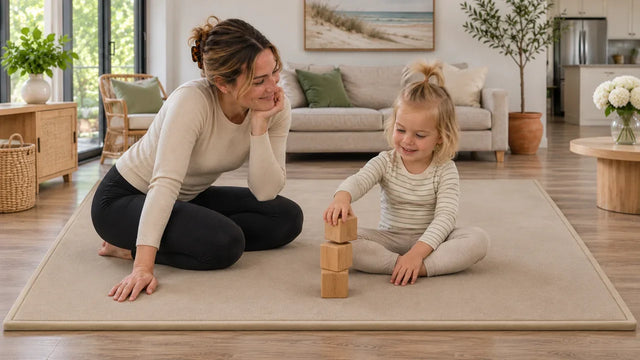
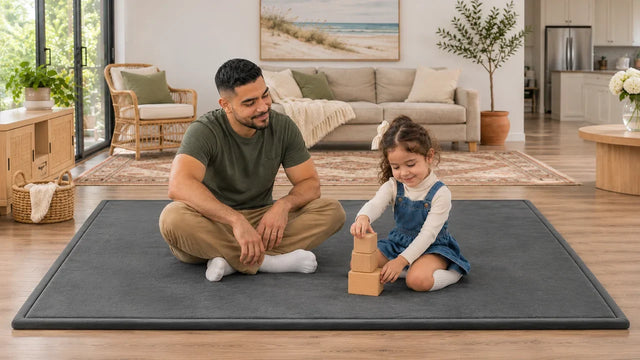
- Free shippingContiguous U.S. (48 states)
- Pre-orderShip timing is on each mat's page
- 30-day returnsOn unused mats
- 1-year warrantyOn every mat