
How to Set Up a Children's Reading Corner, Step by Step
By The Poco Koko team · Updated Nov 17, 2026 · 5 min read

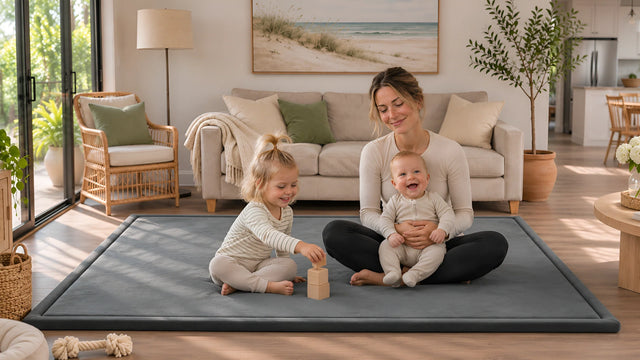
Shown in our 6.5 × 10 ft size, on the way.
On this page
A children's reading corner needs only four things to work well: books that children can see and reach on their own, a soft floor to sit and lie on, good light, and a cushion or two to lean against. You do not need a spare room or a big budget. A quiet corner of a bedroom, playroom or living room is usually enough.
This guide walks through the setup one step at a time, from choosing the spot to keeping the corner fresh after the first exciting week. Each step uses ordinary furniture and things you may already own, so you can build the whole corner in an afternoon.
Step 1: Choose a quiet spot
Look for a corner that has at least one wall to lean against and sits a little away from the main walkway. A spot near a window gives you soft daylight for free, and a nearby outlet makes it easy to add a lamp later.
Try to keep the reading corner apart from the television and the busiest toy bins. When the corner sits right next to blocks and trucks, books tend to lose the competition for attention. Even a few feet of space, or a low shelf turned to face the corner, helps the area feel like its own place.
Step 2: Add a low shelf with books facing out
Young children usually choose a book by its cover, not by the words on its spine. A low shelf or ledge that shows the covers face out makes it easy for them to spot a favorite and pull it down without help.
- Keep it low: the top shelf should be within easy reach of the smallest reader, so nobody needs to climb.
- Show a few, store the rest: six to ten books face out is plenty, with the rest kept in a basket or a closet.
- Anchor it: secure any shelf to the wall with an anti-tip strap or bracket, even a short one.
- Leave space on top: a clear top surface gives you room for a lamp or a small plant, placed well out of reach.
A small display looks calm and inviting, while a packed shelf can feel overwhelming. Fewer books also make putting them back easier, which matters more than it sounds.
All play mats
Step 3: Lay down a soft floor
The floor is where most reading actually happens. Children lie on their bellies, sit cross-legged, lean on a grown-up and spread picture books all around them. A hard floor quickly becomes uncomfortable, so a soft surface is what keeps everyone settled for one more story.
Lay a large play mat right up against the base of the shelf, so the books are within reach from the mat itself. A one-piece mat works well here because there are no seams or puzzle tiles to pull apart, and the edges sit low and flush instead of curling up.
- Comfort for everyone: the velvety-soft top and thick, plush foam are cushy for children and comfortable for adults sitting beside them.
- Grip on bare floors: the non-slip backing stays put on hardwood, tile and laminate, even when someone scoots across it.
- Simple cleanup: it wipes clean easily after a spilled cup and vacuums like a rug.
- Looks like a real rug: it suits a living room or bedroom instead of looking like a nursery item.
If a baby or younger sibling joins the reading corner, keep it for awake, supervised play. Not for sleep. Our care page explains how to spot clean the mat when crumbs or small spills show up.
Step 4: Add cushions and something to lean on
Once the floor is soft, add a little support for backs. One or two floor cushions in a calm color, such as oatmeal linen or soft gray, give readers something to lean against without taking up much space.

A few books, a cushion and a warm lamp are enough.
- A floor cushion or two: big enough for a child to sink into, light enough to move.
- A small blanket in a basket: handy on cool mornings and easy to tidy away.
- A spot for a grown-up: leave room for an adult to sit with their back against the wall, since reading together is often the favorite part.
Bean bags and reading tents are fun extras, but they are not essential. The shelf, the soft floor and a couple of cushions do most of the work.
Step 5: Get the lighting right
Good light makes the corner usable in the evening, when many families read together. Daylight from a nearby window is ideal during the day, so try to place the corner where light falls across the pages rather than straight into a reader's eyes.
For evenings, a table lamp with a warm bulb creates a calm, cozy feeling. Set it on a stable surface, tuck the cord behind the shelf and keep it out of small hands. String lights can add a little sparkle, but hang them high and secure them well away from the floor.
Step 6: Keep the corner fresh
A reading corner stays popular when it changes a little over time. Children notice new covers right away, and a small change can turn a forgotten corner back into a favorite spot.
- Rotate the books: swap a few titles every week or two, and use library books to keep things new.
- Choose a book of the week: put one special story front and center on the ledge.
- Make tidying quick: books go back on the ledge and cushions go back against the wall before bed.
- Read there yourself: children often copy what they see, so sitting down with your own book helps the habit grow.
Reading corner ideas for small spaces
You do not need a full room for a reading corner. A narrow spot beside the sofa, the space under a window or the end of a hallway can work with a slim ledge and a soft floor. If your home is short on space, our ideas for a small playroom show how to fit reading and play into one compact area.
In many homes, the reading corner is simply one end of the main play space. A large mat can hold building at one end and books at the other, with the shelf marking the quiet side. Our guide to a play area in the living room explains how to divide a shared room this way, and our playroom ideas cover the rest of the room. If you are still deciding what to put underfoot, see how a play rug compares with foam tiles.
FAQ
What do you need for a kids reading corner?
You need a low shelf or ledge with books facing out, a soft floor such as a large play mat, good light from a window or lamp, and a cushion or two. Everything else is optional.
How big should a children's reading corner be?
It only needs enough room for a child to stretch out and an adult to sit beside them. A 5 × 6.5 ft mat, about the size of a queen bed, gives two young readers and a grown-up space to share.
Can a reading corner go in the living room?
Yes. A low wooden shelf, neutral cushions and a play mat that looks like a real rug blend in with the rest of the room, so the corner does not feel like it belongs only to the kids.
How do I keep the reading corner from getting messy?
Keep only a few books on display, store the rest in a basket, and make putting books back part of the bedtime routine. A smaller display is much easier for children to tidy on their own.
Find a soft floor for your reading corner in our play mats for the living room.
Written by the Poco Koko team.
- Free shippingContiguous U.S. (48 states)
- Pre-orderShip timing is on each mat's page
- 30-day returnsOn unused mats
- 1-year warrantyOn every mat