
Playroom Ideas That Start With the Floor
By The Poco Koko team · Updated Nov 13, 2026 · 7 min read

Shown in our 6.5 × 10 ft size, on the way.
On this page
Most playrooms are not a whole room at all. They are a corner of the living room, the end of a family room, or a spare bedroom that still has a desk in it. Whatever space you have, the place to start is the floor, because that is where kids spend most of their play time. Once you know where the soft play spot goes and how big it is, everything else, from shelves to baskets to a reading nook, falls into place around it.
This guide starts from the ground up: one soft zone first, then the zones, storage and flooring that go around it.
Start with one soft zone
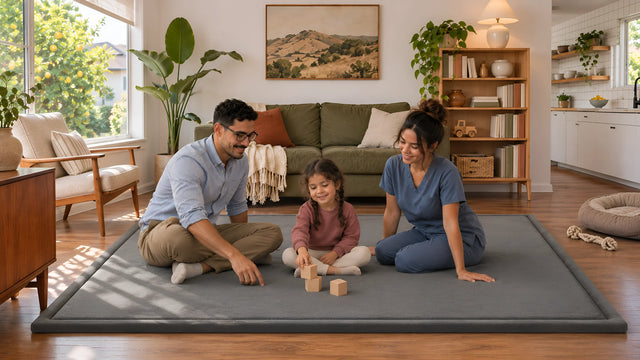
A playroom works well when there is one clear place where play happens. A large, soft mat is an easy way to mark that place. It tells kids where to play, gives them a cushy spot to sit, roll and build, and keeps toys from drifting into every corner of the house.
In our own playroom, we put our largest mat right in the middle of the room. Everything else sits around the edges: a low shelf on one wall, a basket of blocks in a corner, a stack of books near the window. The kids always know where to go, and cleanup means putting things back around the mat.
How big should the soft zone be? A 5 × 6.5 ft mat is about the size of a queen bed, which gives a toddler and a grown-up plenty of room to play side by side. A larger mat suits a dedicated room or more than one child. Our size guide shows how this size compares with a sofa and a queen bed.
A playroom in the living room
If your playroom is really the living room, the goal is a space that works for play during the day and still feels like your living room at night. A few simple choices make that much easier.

- Pick a mat that looks like a rug: a soft mat finished like a real rug can stay down all the time without making the room look like a daycare.
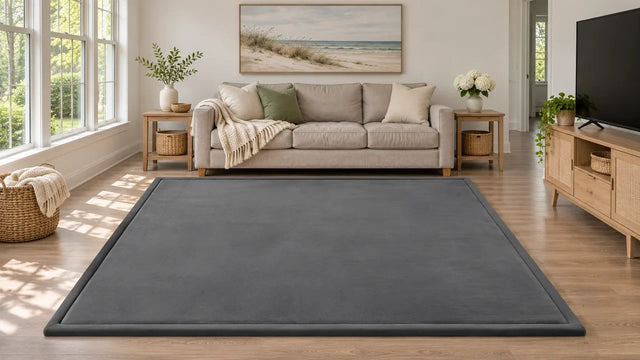
- Use the space between the sofa and the TV: it's often the most open spot in the room, and it keeps play in view of where grown-ups sit. Our guide to a rug between the sofa and TV shows how to fit one there.
- Keep toys in one or two pieces of furniture: a low cabinet or a pair of baskets lets you clean up in a few minutes at the end of the day.
- Choose colors from the room: a mat in a calm neutral or a color already in your pillows or curtains blends right in.
In a living room, the right size depends on the space you have. In our own homes, both our largest and our mid-size mats have worked well, so measure the open floor first and pick the size that leaves a clear path around it. Our guide to living room play mat setup has layouts you can copy.
Play mats for the living room
Zones that work
Once the soft zone is set, you can add a few small areas around it. You don't need all of them, and they don't need to be separate rooms. Even a basket and a cushion can make a zone. A good rule is to keep the zones around the edge of the mat, so the middle stays open for moving.
A reading corner
Pick the quietest side of the mat, away from the door and the toy bins. A low book ledge or a small basket of books is enough, plus a floor cushion to lean on. Face the covers out, because little ones choose books by the picture on the front long before they can read the title. Swap a few books in and out each week so the corner always has something new.
A building spot
Blocks, magnetic tiles and wooden train tracks all need a flat, steady surface, and they make a lot of noise on a hard floor. Keep them in one bin on the edge of the mat, so building happens on a soft surface and cleanup means one bin, not three. A low shelf beside it can hold a half-finished tower overnight, which older toddlers love.
Room to move
This is the open middle of the mat, kept clear for rolling, crawling, dancing and tumbling with a grown-up close by. Move furniture with sharp corners away from it, and anchor anything tall that could tip, like a bookcase, to the wall. A few couch pillows make an obstacle course in a minute, and they go back on the couch when you're done.
A quiet nook
Every child needs a spot to slow down. A small play tent, a big cardboard box with a window cut out, or simply a corner with a few soft pillows works well. Put it where you can still see it from the rest of the room, so a child can wind down with a book while a grown-up stays close.
A creative table
Crayons, stickers and play dough are easier to manage at a small table and chairs than on the floor. Set the table just off the mat, on a surface that wipes clean, so messy projects stay in one place. Keep the art supplies in a lidded box on a high shelf, and bring them down when a grown-up is ready to join in.
Putting the zones together
You don't have to set up every zone at once. Start with the soft zone and one other area, then watch how your child plays for a week or two. If they keep carrying books to the mat, a reading corner is a good next step. If blocks end up all over the house, give them a home on the edge of the mat. The room grows around what your child actually does, not around a picture in a catalog.
Not sure you need a whole room? Our guide to whether a dedicated playroom is worth it walks through the pros and cons.
Storage kids can reach
Good storage is low, open and simple. When kids can see their toys and reach them without help, they play longer and are more likely to help put things away.
- Low open shelves: a shelf no taller than a toddler's chest keeps every toy where they can see it and reach it.
- Woven or fabric baskets: soft baskets are light to carry and gentle on small hands.
- A toy rotation: keep most toys in a closet and bring out a small set each week. Fewer toys out at once means less mess and more focused play.
- Labels with pictures: a simple photo on each bin shows little ones where each toy lives.
Leave a little floor space between the shelves and the mat, so kids can sit right in front of the shelf and choose.
Floors that hold up
A playroom floor takes a beating: spilled snacks, dropped blocks, crayons, wheels and plenty of tumbles. Here is how the common choices compare.
- Bare hardwood or tile: easy to sweep, but hard and cold for sitting and crawling, and every dropped toy is loud.
- Wall-to-wall carpet: soft and quiet, but it holds crumbs and stains and is hard to deep clean.
- Foam puzzle tiles: soft and low cost, but the seams collect crumbs and the pieces pull apart as kids play.
- A one-piece play mat: soft, quiet and easy to clean, with no seams to come apart. It can go on top of hardwood, tile or carpet.
Our comparison of one-piece vs puzzle play mats explains the difference between tiles and a single mat.
Room for grown-ups too
Good playrooms have a spot for the grown-ups, because kids play longer when someone they love is close by. Make sure there is a comfortable place to sit on the floor with them, not only a chair across the room.

A thick, soft mat makes this much easier. It's comfortable to kneel on, sit on and get up from, so parents and grandparents are more likely to get down and join in. A floor cushion or two at the edge of the mat helps too, and a nearby armchair gives tired grown-ups a place to rest while still keeping an eye on things.
For awake, supervised play. Not for sleep.
Small playroom ideas
A small space can still make a great playroom. Choose one soft zone that fits the space, keep only a few toys out at a time, and use the walls for storage, such as a narrow shelf or hooks for bags of toys. A mat that rolls up is handy in a small room, because you can roll it away when you need the floor for something else.
In an apartment, look for corners that already go unused, like the space beside a bookcase or the end of the living room near a window. A shallow basket on wheels can slide under a bed or the couch at the end of the day. And a mat that looks like a rug lets the play spot pass as part of the room when friends come over.
FAQ
What should I put on the floor of a playroom?
A large, soft, one-piece play mat is the easiest place to start. It gives kids a cushioned spot to play, it vacuums like a rug, and it can go on top of hardwood, tile or carpet.
How big should a playroom mat be?
Big enough for a child and a grown-up to sit and play side by side. A 5 × 6.5 ft mat, about the size of a queen bed, suits most living rooms and smaller playrooms, while a dedicated room can take a larger size.
How do I make a living room playroom look nice?
Pick a mat that looks like a rug, keep toys in one or two pieces of furniture, and choose colors that are already in the room. Then a quick cleanup at the end of the day gives you your living room back.
Will a play mat slide on hardwood floors?
Our mats have a non-slip backing that grips hardwood, tile and laminate floors, which helps the mat stay put while kids play.
Ready to set up your soft zone? Browse our play mats for the living room to pick your color.
Written by the Poco Koko team.
Keep reading in Playrooms & living rooms
- Free shippingContiguous U.S. (48 states)
- Pre-orderShip timing is on each mat's page
- 30-day returnsOn unused mats
- 1-year warrantyOn every mat