
Tile vs Carpet: Which Floor Works Better in a Home With Kids?
By The Poco Koko team · Updated Nov 17, 2026 · 5 min read

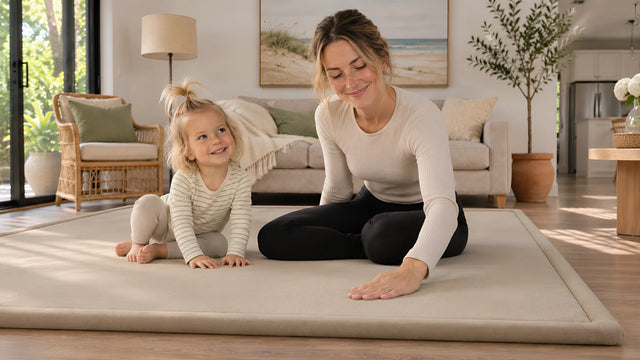
Shown in our 6.5 × 10 ft size, on the way.
On this page
Tile is hard, cool and easy to wipe, so it works well in kitchens, bathrooms, entryways and anywhere spills, splashes and muddy shoes are routine. Carpet is soft, warm and quiet, so it suits bedrooms, playrooms and the places where children sit, sprawl and read. Many homes with kids end up with some of each, and many add a soft play spot on top of the hard floor.
Neither floor is better everywhere. Below, you'll find how tile and carpet compare for feel, spills, noise, cost and wear, which rooms suit each one, and how to make a tiled room comfortable for floor play without replacing anything.
The short answer
Choose tile where water and messes happen most, and choose carpet where comfort and quiet matter most. If your main living space is tiled and you'd rather keep it that way, a padded mat in the play spot gives you a soft area without covering the whole room. Our guide to a play mat that looks like a rug shows how that spot can still look like part of the room.
On tile, our one-piece mat's non-slip backing stays put, and the edge sits low and flush with the floor. The Living Room mat is 5 × 6.5 ft, about the size of a queen bed, and arrives rolled.
How each one feels underfoot
Tile is firm and has no give at all. It often feels cool, particularly in the morning or in colder months, which many families appreciate in hot climates and notice more in winter. For a child who is sitting, crawling or taking first wobbly steps, a tumble onto tile is a hard landing.
Carpet feels soft and warm, and a good pad underneath adds extra cushion. Sitting on the floor for a puzzle or a story is more comfortable on carpet, for kids and grown-ups alike, which is a big reason families choose it for bedrooms and family rooms.
Play mats that look like a rug
Spills and everyday cleaning
Glazed tile is easy to clean because liquids sit on the surface instead of soaking in. A quick wipe handles most spills, and a mop takes care of the rest. The weak point is grout: those lines between tiles collect dirt over time and may need scrubbing now and then, and some grout needs resealing to stay easy to clean.
Carpet handles spills differently. Liquid can soak into the fibers and sometimes into the pad underneath, so it needs prompt blotting rather than wiping. Carpet also needs regular vacuuming to lift crumbs and grit, plus a deeper clean from time to time, especially in busy family rooms.

Noise and echo
Tile reflects sound. Footsteps, dropped blocks and rolling toys can be loud, and a large tiled room may echo. Rugs, curtains and soft furniture help absorb some of that noise.
Carpet absorbs much more sound, so rooms feel quieter and calmer. That can matter in an apartment, in a bedroom near a nap area, or anywhere toddlers run back and forth.
Cost and wear
Prices vary widely for both floors, depending on the material you pick, the size of the room and the installation. In general, tile often costs more to install up front, while carpet is often less expensive at the start.
Over time, the picture shifts. Well-installed tile tends to hold up for a long time, though it can crack or chip if something heavy drops on it, and a single damaged tile can sometimes be replaced on its own. Carpet tends to wear and flatten along busy paths, and it can be hard to save after a big leak or a flood, so it usually needs replacing sooner.
Tile vs carpet at a glance
| Tile | Carpet | |
|---|---|---|
| Feel underfoot | Hard and cool | Soft and warm |
| Falls and floor play | Hard landing | Softer, more so with a pad |
| Spills | Wipe up, water sits on top | Blot fast, can soak in |
| Regular cleaning | Wipe or mop, grout now and then | Vacuum often, deep clean sometimes |
| Noise | Louder, can echo | Quieter |
| Cost and wear | Often more up front, tends to last | Often less up front, wears in paths |
| Works well in | Kitchens, baths, entryways | Bedrooms, playrooms, family rooms |
Where each floor fits
- Kitchens and dining areas: tile, since food and drinks hit the floor every day.
- Bathrooms and laundry rooms: tile, because water is part of the routine.
- Entryways and mudrooms: tile, to handle wet boots and tracked-in dirt.
- Bedrooms and nurseries: carpet, for warmth and quiet.
- Playrooms and family rooms: either one works, and the deciding factor is often whether you'd rather clean spills easily or sit comfortably on the floor.
The middle path on tile: a mat in the play spot
If your living room is tiled, you don't have to choose between a floor that wipes clean and a soft place to play. Keep the tile, and lay a one-piece play mat where your little one spends the most time. The thick foam core cushions falls and is softer than the bare floor, while the tile around it stays easy to mop. For awake, supervised play. Not for sleep.

Now and then, lift a corner and wipe the tile underneath.
A few habits keep it working well on tile. Make sure the floor is clean and dry before you lay the mat down, and keep furniture off the mat and its edges so it lies flat. Once in a while, lift a corner and vacuum or wipe the tile underneath, because grit under a mat is easy to miss. High-gloss stone can vary, so check that the mat stays put on your specific floor. Our care guide covers the mat side of the routine, from vacuuming to spot cleaning.
For more detail on choosing a mat for this floor, see our guide to a play mat for tile floors. If your home mixes tile with wood, our tips for a play mat on hardwood floors cover the other half of the house.
What about carpeted rooms? Carpet with a pad already softens the floor. Our non-slip backing is made for hard floors like tile, hardwood and laminate and isn't tested on top of carpet, so we recommend using the mat on a hard floor.
FAQ
Is tile or carpet better for a baby?
Each has strengths. Carpet is softer and warmer for floor play, while tile is easier to clean after spills. Many families with tile simply add a padded mat in the play spot.
Is tile too hard for a crawling baby?
Tile is a firm, hard surface, so crawling and early tumbles feel harder there. A thick, cushy mat in the main play area gives your baby a softer place to land.
Is carpet harder to keep clean than tile?
Usually, yes. Spills can soak into carpet and need quick blotting, while tile can be wiped. Tile still needs attention, though, because grout lines collect dirt over time.
Can I put a play mat on carpet?
Our mat's non-slip backing is designed for hard floors and isn't tested on carpet. On wall-to-wall carpet, the floor is already softer, so we suggest placing the mat on tile, hardwood or laminate.
Find a soft, rug-style spot for your tiled room in our collection of play mats that look like a rug.
Written by the Poco Koko team.
Keep reading in Floors & materials
- Free shippingContiguous U.S. (48 states)
- Pre-orderShip timing is on each mat's page
- 30-day returnsOn unused mats
- 1-year warrantyOn every mat