
Toy Display Ideas: Low Shelves Kids Can Reach From the Play Mat
By The Poco Koko team · Updated Nov 17, 2026 · 5 min read

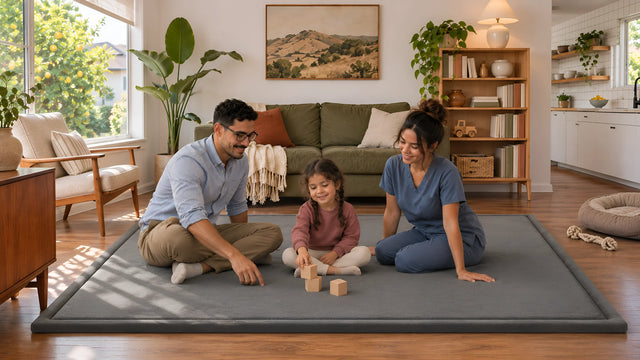
Shown in our 6.5 × 10 ft size, on the way.
On this page
The easiest way to display toys for little kids is to put a few of them on a low, open shelf that stands on the floor right beside the play mat. Each toy gets its own spot with a little space around it, and the shelf stands close enough that a child sitting at the mat edge can reach it without climbing or standing on anything.
Display is a different job from storage. Storage hides toys in bins so the room looks calm, while a display shows a small, deliberate choice, so kids can see what is available and pick for themselves. This guide covers the kinds of displays that work at floor height, where they go next to the mat, how many toys to put out and how to keep each piece steady.
Display and storage are two different jobs
Most homes need both. Bins and closed cabinets hold everything that is not in use right now, and a display holds the few things that are. If you are working on the hidden side, our living room toy storage ideas cover baskets and cabinets that blend in with grown-up furniture.
A display works when it is small and easy to read. A child who sees six toys on a shelf can take in the whole choice at once, while a child facing forty toys in a heap often pulls everything out just to find one. For the bigger picture of a room built around one soft floor, see our playroom ideas.
Measure the reach from the mat edge
The mat is where kids sit to play, so the display should line up with it. Put the shelf on the bare floor beside the mat, never on the mat or its edge, and leave a small strip of floor between the two, about the length of your child's arm. That gap keeps the furniture off the mat, yet it is still close enough for them to lean over and take a toy.
Then do a quick test. Sit your child at the mat edge in front of the shelf, or sit there yourself at their height, and notice which shelves they can reach from sitting or kneeling. Those are the display shelves. Anything higher is for grown-up things, or for toys that only come down with your help.
Our Living Room size is 5 × 6.5 ft (59 × 79 in), about the size of a queen bed. Lined up along its 79 in side, a low shelf about 3 ft wide covers less than half of that edge, which leaves room for a book rack or a basket beside it. The mat sits low and flush, so kids can shuffle from the mat to the shelf and back without a big step.
Play mats for the living room
Four kinds of toy display that work at floor height
- A low open shelf: two levels, open at the front, with no doors to pinch small fingers. Wood or a painted finish both work. Give each toy its own patch of shelf.
- Picture ledges: narrow wall shelves with a lip at the front, screwed low on the wall. They hold flat things like a wooden puzzle, a few drawings or a row of wooden animals.
- A front-facing book rack: books stand with their covers out, so a child can pick by the picture. Three or four books on a rack often get more use than a full bookcase.
- A tray on the bottom shelf: one tray holds the parts of one toy, like stacking cups or a few blocks, so the whole set comes off the shelf in one go.
For a cozy book spot built around a rack like this one, our guide to a kids reading corner walks through the steps.

Put fewer things out
A display reads most clearly with generous space around each toy. One toy per spot, with about a hand's width of empty shelf on each side, is a simple rule to follow. If the shelf starts to look crowded, take something off rather than squeezing another thing in.
A good test is whether you can name everything on the shelf at a glance. Keep the rest in bins, and swap a few things every week or two, since a toy that returns after a rest often feels new again.
- Mix the kinds of play: something to build, something to fit together, a book and something to pretend with.
- Keep the parts together: a toy with pieces goes on a tray, so the pieces don't wander across the shelf.
- Leave the empty spots empty: a gap shows exactly where a toy goes back.
A calm floor helps the displayed toys stand out, too. A quiet color like the Mushroom play mat, a warm beige, keeps attention on the shelf instead of on a busy pattern underneath.

Keep every display piece steady
A display shelf sits right where kids play, and a child who pulls up to stand will grab whatever furniture is closest. Anchor every shelf to the wall, including the short ones. The Consumer Product Safety Commission says existing furniture can be anchored with inexpensive anti-tip brackets. It also says to remove items that might tempt kids to climb, such as toys and remote controls, from the top of furniture.
That second tip shapes a toy display. Put the toys on shelves a child can reach from the floor, not on top of a taller piece where they would have to climb. Screw picture ledges into the wall studs or use the anchors the maker supplies, and keep heavy things, like a full set of wooden blocks, on the bottom shelf.
Keep the shelf off the mat and off its edges. A shelf resting on a soft edge is less steady, and its weight can push the mat out of shape, so a bare strip of floor between them keeps both flat.
Where a toy display can go
- Along a wall beside the mat: the classic setup, with the mat's long side facing the shelf.
- At the end of a sofa: a low shelf in line with the sofa arm holds a few toys and still looks like living room furniture.
- Not under a window: a low shelf there is easy to climb, and blind cords often hang close by.
A two-minute reset at the end of the day
A display only works if toys go back to their spots. At the end of the day, carry each toy back to where it came from and leave the empty spots empty. Then give the mat a slow vacuum pass, one way and then across, so crumbs don't settle into the plush. Our care guide has the full weekly routine.
Whenever a baby is on the mat, a grown-up stays close by. For awake, supervised play. Not for sleep.
FAQ
How high should a toy display shelf be?
Low enough that your child can reach the display shelves while sitting or kneeling on the floor. Test it at the mat edge, and keep anything higher for grown-up things.
How far should a toy shelf be from a play mat?
Put it on the bare floor beside the mat, about the length of your child's arm from the edge, so the shelf stays off the mat and they can still reach it without standing.
How many toys should be on display?
A small choice with space around each toy, often five to eight in all. Store the rest and swap a few every week or two.
What is the difference between toy display and toy storage?
Storage hides toys away in bins and cabinets, while a display shows a few toys on open shelves, so kids can see them and choose.
Give your toy display a soft, rug-like floor to sit on with our play mats for the living room.
Written by the Poco Koko team.
- Free shippingContiguous U.S. (48 states)
- Pre-orderShip timing is on each mat's page
- 30-day returnsOn unused mats
- 1-year warrantyOn every mat